Jewish Wit and Jewish Conservatism: Salcia Landmann – A Portrait in Paradox
University of Sussex
This article examines the intellectual double life of Swiss-Jewish publicist Salcia Landmann, who achieved widespread literary acclaim while simultaneously maintaining a decades-long involvement with the German-speaking far right. Although she actively self-styled herself as the leading authority dedicated to rescuing destroyed Eastern European Jewish culture from oblivion, contemporary Jewish critics frequently accused her of perpetuating anti-Jewish clichés. Paradoxically, Landmann regularly contributed to New Right and extremist publications, where she utilised her Jewish identity to attempt the rehabilitation of pseudoscientific racial concepts and to legitimise fierce anti-immigration sentiments. Within these radical networks, she served as a willing ‘Jewish alibi’, effectively shielding right-wing actors from accusations of racism and providing discursive legitimacy to their prejudices. Ultimately, this study embeds Landmann’s unusual trajectory within Jewish historiography to illuminate the underexplored phenomenon of Jewish political participation in conservative and right-wing milieus.
The Swiss publicist Salcia Landmann (1911–2002) achieved remarkable literary success with Der jüdische Witz (The Jewish Joke) in 1960.1 Her collection of Jewish jokes claimed to rescue a destroyed culture from oblivion and to make its humour accessible to those still able to understand and cherish it. Landmann wished the book to be read as a ‘quiet requiem for the vanished world of East-European Jewry’2 – a requiem, not a kaddish. The lapse is telling, for her work was embraced above all by readers outside the Jewish community. Jokes once made by Jews for Jews suddenly attracted the attention of a broad audience in post-Nazi Germany. In both contemporary reception and in Landmann’s self-perception, Der jüdische Witz was seen as making a valuable contribution to the revival of German-Jewish encounter in the Federal Republic. Yet some contemporaries looked upon this enthusiastic laughter at Jewish mishaps and foibles with scepticism, suspecting dubious and, at worst, anti-Jewish motives.
In consequence of her immense success, Landmann increasingly styled herself as the leading administrator of Jewish culture – an authority she defended energetically against critics, many of them Jewish. The following critical analysis examines her wider oeuvre, which was not limited to popular publications about Jewish themes. Landmann was also an intensely political writer, a fact that many of her readers may barely have been aware of. A self-described conservative, for decades, she took an active part in a milieu where she would scarcely have been expected to appear. She contributed regularly to right-leaning and even far-right publications, where she came to occupy an exceptional position, largely out of view of the wider public.
Her Jewish identity played a decisive role in this deliberate political positioning, both in how she was perceived from the outside and in her own self-conception as a Jewish writer of the Right. Simultaneously, her near-exotic status within right-wing circles offers insight into the ways Jewish figures were framed and strategically instrumentalised. The aim here is to examine and interpret these two unusual and seemingly contradictory aspects of her double life as a writer.
It will first be demonstrated how Landmann succeeded in establishing herself as an expert on Jewish matters – and how she came to inhabit this role. This self-conception proved equally central to her involvement in right-wing milieux, where her authority was not contested – mainly, because she was sought out as a Jewish alibi. The analysis focuses on this largely unexplored dimension of her oeuvre: her contributions to a right-leaning sphere of publication and the extent to which these activities were intertwined with her Jewish self-understanding. Although she occupied a unique position within the German-speaking extreme Right, her writings are not without parallels in Jewish history, as will be shown in the conclusion.
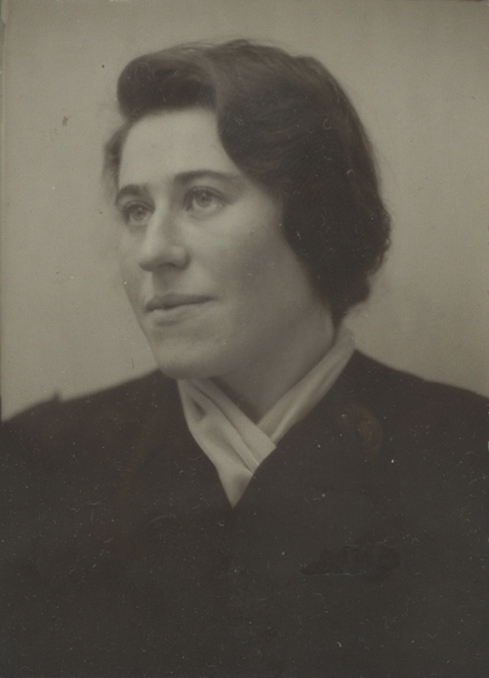
Figure 1: Young Salcia Landmann, date unknown, KBV, VNL 53 : C : 3
Looking back on her life’s work, Salcia Landmann described ‘the inner compulsion […] to preserve the murdered world of Jewish culture for outsiders and future generations’. At a literary evening in a St. Gallen bookshop in 1990, she told the audience that the Jewish Nobel laureate Isaac Bashevis Singer once asked her why she had started writing books. Her reply had been: ‘It was Hitler who drove me to the writing desk.’3
Born in 1911 in Żółkiew, a town with a mixed Polish, Ruthenian and Jewish population, she attended a Polish convent school for a year during the First World War. Her parents, Israel and Regina Passweg, had emigrated to St. Gallen, Switzerland, at the outbreak of the war, and after its end, Salcia joined them with her grandparents. Her father, a textile merchant, had already established business connections in St. Gallen. There she attended the Classical Humanist Secondary School (humanistisches Gymnasium) and later studied philosophy – first in Berlin, but in 1933 she transferred to Basel, where she earned her doctorate with a dissertation on Phenomenologie und Ontologie.4 In 1939, she married Michael Landmann, the son of Julius and Edith Landmann, who were connected to the Stefan George circle. Michael Landmann became a professor of philosophy at the Free University of Berlin in 1951 and later spent his final years in Haifa, where he also died and was buried. Salcia, however, remained in St. Gallen throughout her life. Although they formally remained married, she rarely mentioned her husband, and no letters have survived that might shed light on their marriage.
In her publications, Landmann would later embellish her early childhood into a vivid tableau of Jewish and Habsburg-Galician experience. Across several works, she offered romanticised idealisations of multicultural Galicia under Habsburg rule, reviving a colourful world of Yiddish shtetl life. Her depictions in books such as Mein Galizien (My Galicia)5 and Erzählte Bilderbogen aus Ostgalizien (Narrated Picture Panels from Eastern Galicia)6 conveyed a ‘constructed retrospective image of Jewish identity’,7 one that corresponded neither to the realities of the time nor to any authentic personal experience. She described her family, on the one hand, as ‘devout Jews’ (‘fromme Juden’)8 and pointed to rabbinic scholars among her ancestors; yet she herself had attended a convent school for girls run by the Felician Sisters in Żółkiew. For observant Jews – whether orthodox or assimilated – it was highly unusual to send their children to Catholic schools, which were regarded as centres of Christian proselytisation. Landmann would later recount that, at the time, she had been entirely unaware of her own Jewishness. Only later did she construct a Jewish identity that rested largely on her supposed formative exposure to the world of Eastern European Jewry. This form of self-fashioning is significant because she employed this claimed biographical experience as proof of her authority on the subject – a claim she defended with obstinate vehemence whenever it was contested.
With the publication of her collection Der jüdische Witz in 1960, Landmann suddenly became known – especially in West Germany – as one of the leading authorities on Jewish topics to a broader public. The book topped the Der Spiegel bestseller list for months and received more than a hundred reviews. To this day, it has gone through over twenty editions, with more than one million copies sold since its first release. It has been translated into French, Spanish, and Italian (though not into English). Her collection of Jewish jokes was followed by numerous popular works on Jewish history, cuisine and language.9 An introduction to Yiddish also earned recognition from established scholars.10 Her translations from Yiddish of works by Sholem Aleichem, Itzik Manger, and Isaac Bashevis Singer are also of lasting merit, having opened these authors to a German-speaking readership.11 In addition, Landmann actively supported Jewish scholars and Yiddishists living in precarious circumstances, helping them to secure lecture invitations and assignments.12
The French-born American poet, translator and journalist Édouard Roditi, himself of Jewish descent, had already critically commented on the bizarre ‘return’ of Europe’s Jews that took shape around 1960, particularly in West Germany. Literature that before the Shoah had found almost exclusively Jewish readers was now being enthusiastically received by a broad non-Jewish audience. This ‘absurd [...] new interest in Yiddishkeit’, Roditi observed, could be seen in the new edition of Sholem Aleichem’s Tewje, der Milchmann by Frankfurt’s Insel Verlag and in the immense success of Landmann’s collection of jokes. To Roditi, this newfound fascination with the culture of the destroyed Eastern European Jewry seemed deeply suspect.13
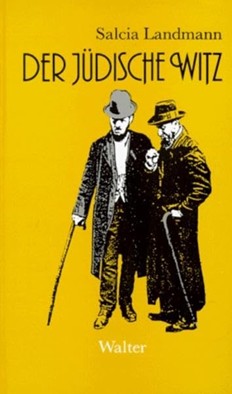
Figure 2: Book cover of the first edition of Der jüdische Witz, 1960
Der jüdische Witz had struck a nerve. In numerous reviews, the press was effusive in its praise of the jokes. Reviewers also pointed to the book’s broader cultural function. Der Spiegel claimed that it ‘seems more capable than many official attempts at coming to terms with the past [manche offizielle Vergangenheitsbewältigung] of fostering German non-Jews’ understanding of the Jewish character’.14 The book was lavishly credited with a therapeutic, even redemptive function. Landmann’s introduction suggested that Jews had once used humour to make misery and persecution bearable. Some now argued that this same humour might help postwar Germans cope with their burden of genocidal guilt. Cathartic laughter was meant to ease the tension in the German-Jewish relationship burdened by the Nazi past and to promote reconciliation.15
This one-directional process – with former perpetrators and their descendants laughing exclusively at their annihilated victims – can hardly be characterised as a gesture of reconciliation. The Frankfurt social philosopher Theodor W. Adorno firmly refused to review the book. He suggested that the book seemed to belong ‘to that somewhat dubious sphere of the contemporary German-Jewish machinery [deutsch-jüdischer Betrieb]’, thereby echoing an observation similar to Roditi’s – ‘where the executioners extend a hand of reconciliation to the hanged while at the same time implying that their hanging was justified’.16 In his study of Jewish humour, historian Louis Kaplan assumes that in this case laughter served as a substitute for mourning about the victims. His interpretation of the ‘joke mourning complex’ opens a wide range of possibilities for Landmann’s reception: ‘the joke as work of mourning, the joke as substitute for mourning, the joke as a diversion for mourning, the joke as a shortcut for mourning, the joke as the incapacity for mourning, and even the joke as the other of mourning’.17
Other Jewish critics, in addition to Adorno, doubted that Landmann’s Jewish book could serve as a potential basis for a new understanding between Germans and Jews, as the German press so exuberantly praised it for. Several pointed out the dull style the jokes were presented and the damage she had done to the heritage of Jewish wit. In a rejoinder published in 1971, Jan Meyerowitz went so far as to remark that the book had ‘struck many Jews […] as almost as repellent and painful as much of what was written during the Nazi era’.18 Others, conversely, still valued the intention of preserving and memorizing this lost Jewish world.19 In a particularly harsh review, the Jewish-Austrian writer Friedrich Torberg was alarmed about ‘eas[ing] the German uptightness’, as the German weekly Die Zeit dubiously credited Landmann for.20 Torberg claimed that Landmann’s book, perhaps without even realizing, relied on and reinforced the most common and shameful anti-Jewish clichés. Her book was a bestseller not despite its antisemitism, but because it was antisemitic at its core, as Torberg noted reproachfully, edited by a Jew devoid of self-respect, celebrating self-defilement. The German literary scholar Jakob Hessing concurs with Torberg’s cynical conclusion that ‘they [the non-Jewish readers] have come to terms with the past – and even managed to enjoy themselves in the process’.21 Hessing, too, considers Der jüdische Witz from today’s perspective as a cheap act of intellectual self-exoneration.22
Torberg’s twenty-five-page polemic against Landmann’s book was aimed at its destruction. Much of his critique was devoted to attacking her narrative treatment of the collected jokes. He contested her knowledge of Jewish history and even the sensitivity to Yiddish subtleties. Her renderings of the jokes, he argued, were inferior to both the originals and to earlier canonical collections – sources she either did not know or had drawn upon without reference. Landmann claimed originality; Torberg, by contrast, insinuated plagiarism.
Torberg and other critics also took issue with another of Landmann’s assertions: her stated intention was to rescue the Jewish humour of Eastern Europe from oblivion. This effort rested on her claim that Jewish humour no longer existed, since the historical conditions that had once nurtured it – namely discrimination and persecution within the non-Jewish environment – had disappeared. Consequently, she argued, there was no longer any Jewish humour in either Israel or the United States. Isaac Bashevis Singer pointed to the emergence of a new American Jewish wit, while Torberg – who had achieved immense popular success shortly after Der jüdische Witz as the translator of Ephraim Kishon’s works, thereby introducing the Israeli writer to a wide readership – insisted on the continuing vitality of Jewish humour in Israel.23
Landmann refused to accept the substantive insight that lay beneath Torberg’s polemical tone. While later editions of her book incorporated a large number of additional jokes – many of them based on submissions from readers – she still made no mention of the principal German-language source of her material: Jüdische Schwänke (Jewish Droll Stories), edited in 1928 by publisher Max Präger and journalist Siegfried Schmitz.24
Landmann did not comment on Torberg’s review until after his death in 1979 – and then in a tone of vindictive bitterness born of wounded pride. In 1990, she launched a counterattack. She obstinately insisted that the jokes were her own, that they were amusing as they were, and that her critics had entirely misunderstood the very nature of Jewish humour. Torberg, the ‘incompetent charlatan’, as she vilified him, had been envious of her, the ‘outsider’, who had come up with such an idea. The entire media, ‘even the Vatican press’, had praised her book enthusiastically, Landmann highlighted. Eventually she descended into openly antisemitic slander, fantasizing about a ‘Jewish censorship bureau’. In her view, Torberg and ‘a small clique of repatriated café writers’, utterly lacking in spirit, intellect, and expertise, had arrogated to themselves the right to exclusively define Jewishness before a non-Jewish public. She portrayed them as unoriginal, envious, and morally corrupt – for setting out to destroy her. Why they should have singled out Landmann, herself Jewish, remained obscure. To draw her audience into her antisemitic fantasy, she asserted that this ‘pack of Holocaust profiteers’ also exploited Gentile shame over the Holocaust: She claimed that Torberg and a circle of unnamed accomplices would expose individuals for ‘alleged or actual Nazi complicity’, thereby even ruining academic careers.25 Landmann proclaimed that magazines and publishing houses had been beseeching her to release this sixty-page counterblast to Torberg – written more than ten years after his death. In fact, her text was published shortly afterwards in Staatsbriefe (Letters on the State), a fringe and small-circle far-right periodical, as a five-part series in which she launched further tirades.
Landmann considered it her ‘life’s mission’ to convey the ‘profile, character, and distinctive spirit of Judaism in general, and of Eastern European Jews in particular, in an objective and captivating way’.26 Whoever questioned her competence in this respect incurred her wrath. Neither were her antisemitic outbursts an isolated incident, nor was her publication in a far-right magazine a mere aberration. Landmann was not only the author of popular accounts of Jewish culture, humour, anecdotes, or recipes. In fact, she remained in demand among publishers until the end of her life. In 1993, a CD featuring Yiddish language samples and songs was released, and in 1996 she appeared with Alfred Biolek on his television cooking show alfredissimo! to prepare gefilte fish. That she led something of an intellectual double life – for decades an energetic and prolific contributor to the German-speaking far-right milieu – appears, in the end, to have done little to tarnish her broader public image.
Landmann took her first public turn to the right only a few years after the publication of her initial major success, when, in 1967, she released a book titled Die Juden als Rasse (The Jews as a Race),27 again with the Swiss publisher Walter Verlag. It rested on pseudoscientific, race-anthropological notions: according to Landmann, peoples were racial hybrids; ‘racial mixtures’ (‘Rassengemische’) could have a stimulating influence on culture, though complete assimilation was neither possible nor desirable. Referring to the German nationalist student fraternities of the Kaiserreich, she asked rhetorically: ‘What business did Jewish students have in such associations?’ She saw nothing reprehensible in antisemitic admission bans, arguing that Jews ‘were seeking entry where they did not belong’.28 For Landmann, though only an autodidact in the field, racial characteristics remained immutable facts that couldn’t be ignored.
Landmann’s aim was not to reaffirm the racial doctrine of National Socialism. Rather, she sought to mitigate its radical antisemitism through the use of racial categories. Her first remarks on the subject date back to February of 1946, in which she criticised both the glorification of the ‘Nordic race’, which claimed all cultural achievements for itself, and the portrayal of Jews as a ‘counter-race’ endowed with diabolical qualities.29 Her starting point was the idea that racial constructs had been imposed upon Jews as defining labels that served to legitimise their persecution. Yet she herself believed in biological criteria that distinguished peoples physically and in character. She engaged extensively with works of Hans F. K. Günther – himself no natural scientist, yet appointed professor for ‘Social Anthropology’ in Jena by the Nazis. Günther is assessed as one of the principal popularisers of National Socialist racial theory and remained a committed adherent of its ideology long after 1945.30 While Landmann criticised Günther and his notion of hierarchisation, drawing instead on the eugenic ‘constitutional theories’ of Ernst Kretschmer, she nonetheless regarded racial concepts as worthy of discussion and even presented the examination of racial differences as essential to understanding human history.
Her aim was to refute the racial-political ideal of purity, whilst at the same time rehabilitating the concept of race as a meaningful heuristic tool. This approach may be situated within the tradition of Jewish biologism at the turn of the century: Jewish race anthropologists appropriated eugenic ideas in order to secure a place for Jews within a conception of humanity divided into races, and to deprive racial interpretations of their antisemitic sting. In the studies of historians John Efron and Veronika Lipphardt, this Jewish biologism is therefore understood as an ambivalent instrument of self-assertion and agency.31 Landmann, however, stood alone in advocating such an approach after 1945. Moreover, the fact that a Jewish bestselling author sought to rehabilitate the very idea of race quickly drew the attention of the extreme Right.
The far-right organ Nation Europa eagerly seized on the book, claiming it openly admitted the ‘barbaric origins’ and nomadic nature of Judaism. Reviewers emphasised ‘respect for all humanity’, as Landmann was said to have stressed, supposedly expressed in the diversity and distinctiveness of peoples and races.32 Behind this cynical posture of pseudo-appreciation lay malicious satisfaction that a Jewish author seemed to confirm that Judaism was to be understood as an alien race. Founded in 1951 by former SS officer Arthur Ehrhardt, the journal represented a strand of right-wing extremism in the Federal Republic that sought to move beyond the narrow circles of old Nazis and appealed to a broader ‘national opposition’.33 Its name and concept revived the Waffen-SS idea of a ‘Great European Nation’, an ideological vision of order based on white superiority.34 In the same issue as the review of Landmann’s book, Ehrhardt denounced Jewish ‘cultural subversion’, portraying Judaism as a foreign body with a corrosive influence on German intellectual life.35 Nation Europa later reprinted jokes and Yiddish anecdotes from Landmann’s books. As Torberg had worried, they were used as proof of alleged Jewish character flaws – seemingly confirmed by a Jewish source. To this day, Landmann’s book remains a favoured point of reference in far-right circles.36
Salcia Landmann was, however, not only discussed by others but took an active part as a writer in the orbit of the radical Right. She wrote for outlets on the far-right fringe in Germany, Switzerland, Austria, and Liechtenstein. Inevitably, she kept her distance from the most extreme gazettes, whose often thinly veiled antisemitism was easy to discern. Instead, she aligned herself with the emerging New Right (‘Neue Rechte’) of the 1970s – a movement diffusing between radical right-wing circles and the conservative establishment, yet keen to display restraint when it came to antisemitism. ‘As an anti-Marxist and a Zionist’, she explained 1996 retrospectively in Junge Freiheit on the paper’s tenth anniversary, ‘left-wing or left-liberal media were never an option for me’.37 Essays written in this spirit were published in her 1979 collection Marxismus und Sauerkirschen (Marxism and Sour Cherries)38.
It is essential to clarify what exactly is meant by the ‘New Right’, even though any clear-cut or final definition is impossible to give. The so-called New Right is not simply identical with the post-1945 extreme Right. Its protagonists did not seek to restore National Socialism, but rather to revive the authoritarian and anti-liberal traditions of the völkisch movement and the Jungkonservative (Young Conservatives). A wide array of predecessors and forerunners, rivals and dissenters, but also beneficiaries and co-shapers of National Socialism were invoked as intellectual points of reference, with the aim of influencing and radicalizing the Federal Republic’s conservatism.39 There were, both in ideas and in personnel, extensive overlaps with the extreme Right. Yet many sought to set themselves apart – rhetorically and strategically – by cultivating an elitist self-image or by styling themselves as ‘conservative’ or ‘New Right’. A closer look at right-wing networks in the Federal Republic reveals that any precise distinction between the conservative and the extreme right is difficult to sustain – and may, in fact, be misleading.40
Antisemitism makes the picture still more intricate. Within the Federal Republic’s conservative establishment, it was discredited and socially taboo. In the media of the Springer press and within the Christian Democratic parties, public commitment was made to restitution and the protection of Jewish life, and to the importance of German–Israeli relations. Yet among German conservatives, confronting the Nazi past was studiously avoided for decades. In the 1960s, the Swiss-born publicist Armin Mohler, one of the leading figures of the New Right, was considered a respectable conservative voice. His call for a ‘general amnesty’41 and for an end to the legal, public and historiographical examination of National Socialism resonated with many conservatives’ attitude at the time. From the mid-1960s onward, Mohler became one of the most vocal advocates of drawing a final line under Germany’s Vergangenheitsbewältigung – its effort to come to terms with the Nazi past.42
Not even the extreme Right openly expressed antisemitism after 1945. The ‘old’ Right, which in many cases drew directly on personnel and traditions of National Socialism, sought instead to undermine the legitimacy of the Nuremberg Trials and the prosecution of Nazi perpetrators in the Federal Republic by framing them as mere ‘victors’ justice’ or as part of an Allied project of ‘re-education’.43 Already in the immediate postwar period of the late 1940s, antisemitism within these circles found new forms of expression – most notably in the denial of the Holocaust or in the demonisation of Israel, which served to rationalise antisemitic attitudes.44 Such attempts were often crude and easily exposed, resonating only within the outermost margins of political discourse. The New Right would later pursue similar strategies – though with considerably more rhetorical skill and strategic subtlety.
A ‘call for closure’ (‘Schlussstrich’) – voiced so vehemently by New Right ideologues such as Mohler – again points to the porous boundaries between conservative and more radical milieux. It was only when he began, from the late 1970s onward, to circulate explicitly revisionist claims about history that he became largely isolated within conservative circles. Mohler did not literally deny the Holocaust. Yet, like many other representatives of the New Right, he preferred to deploy intellectual smokescreens – rhetorical and philosophical manoeuvres designed to distance himself from the image of the open antisemite. References to Jewish voices that allegedly or selectively confirmed their own positions have always been a favoured tactic among the extreme Right.45 The New Right often chose the path of intellectual debate – discussing supposed Jewish ‘character traits’ or questioning, in a quasi-academic tone, whether the Holocaust had in fact taken place. Such gestures suited their elitist self-image as intellectuals, while at the same time drawing on long-standing far-right discursive strategies, to which we shall return later.46
Salcia Landmann occupied a distinctive place within these intellectual strategies and the broader milieu of the New Right. In the 1970s, she contributed essays to Criticón, a monthly magazine edited by Caspar von Schrenck-Notzing. Her involvement with Criticón was likely facilitated by Mohler, who had not only been a regular contributor, but had also known Landmann since the late 1940s in Basel.47 Criticón served as a platform for diverse, explicitly non-leftist political perspectives, united by the ambition to reclaim interpretive authority from allegedly dominant left-wing currents. Contributors ranged from democratic conservatives to figures on the far Right.48
Landmann’s contributions linked criticism of the Left with explicitly Jewish themes. She polemicised against the radical student movement, accusing it of having a naive faith in Marxist ‘magic formulas’ and of indulging in utopian fantasies of liberation and sexuality. Above all, she identified the philosophy of Herbert Marcuse as the intellectual source of these tendencies. Landmann interpreted such ideas as a form of ‘Jewish sexual messianism’, akin, in her view, to the ecstatic and redemptive impulses of the early modern Sabbatai Zevi and Jacob Frank movements.49 By contrast, she herself appealed to ‘more conservative than revolutionary’ strands within Jewish history – invoking figures such as Walther Rathenau and the patriotic traditions of German Jews dating back to the Napoleonic Wars.50
However, it was above all the New Left’s attitude toward Israel that most disturbed her. Despite their explicit rejection of the Nazi fathers’ generation, Landmann argued, they too were imbued with antisemitism – calling, as she put it, ‘openly for the extermination of the Jews of Israel’.51 Salcia Landmann made no secret of her defence of Israel, even among right-wing circles. For decades she sought to win sympathy for Israel precisely within the ranks of the Right. After a few contributions to the magazine, however, Criticón’s editor Schrenck-Notzing, to her evident dismay, rejected her further submissions on the subject.52 Landmann subsequently published occasional articles in the conservative daily Die Welt and, later, in the weekly newspaper Junge Freiheit, founded by Dieter Stein in 1986.
Junge Freiheit developed into a leading outlet of the German New Right, ideologically shaped by the legacy of Arthur Moeller van den Bruck, Edgar Julius Jung, and the Jungkonservativ tradition. The paper propagated a form of antisemitism suffused with religious overtones. A recurring motif was the claim that remembrance of the Holocaust had assumed quasi-religious dimensions. The so-called ‘Holocaust religion’ and ‘cult of guilt’, it was argued, had come to replace Germany’s Christian-national identity.53 At the same, in the mid-1990s, the editor Dieter Stein sought to distance the paper from more radical voices so as to avoid the suspicion of Holocaust denial. Landmann, for her part, both criticised the newspaper and defended it.
She pointed to the Christian roots of antisemitism, arguing that even Holocaust denial represented a continuation of the medieval myths and slanders about Jews. Only if the paper succeeded in confronting these issues openly, she maintained, could any meaningful dialogue with Jews emerge – and only then, she added in 1996, would she consider continuing to contribute.54 In fact, apart from the consistently enthusiastic reviews of her books, this was to be her last appearance in Junge Freiheit. Despite this seemingly firm stance, Landmann nonetheless offered a kind of moral exoneration. Two years earlier, in 1994 – when Junge Freiheit was first listed in the annual report by the Office for the Protection of the Constitution of North Rhine-Westphalia (Verfassungsschutzbericht) and internal conflicts within the editorial team had erupted over the paper’s future direction – she publicly sided with the Right.
When Armin Mohler, in his short-lived Junge Freiheit-column, asserted the right to include revisionist authors and works in contemporary debates about history without such engagement being treated as taboo, editor Stein invited Landmann to contribute a response that might defuse the controversy. Evidently, a word of exoneration could only be spoken by a Jew. Landmann responded with a conciliatory statement, affirming that Mohler was, in her eyes, no antisemite. She was well aware that many of the ‘right-wing national Germans’ were at least flirting with Holocaust-denialist positions. Even so, Jews in and outside Israel, she argued, should finally recognise that the political Right no longer posed a threat to them. But she urged the right camp to not undermine their own cause through denialism. It would be to their credit to address all manifestations of antisemitism – past and present – openly. She pointed, for example, to the persistence of anti-Judaic traditions within the Church, to the far-right Russian Pamyat movement and to the trivialisation of anti-Israeli antisemitism in the Arab states – an attitude, she noted, perpetuated both in German public discourse and by the United Nations.55
Her misjudgement of the virulence of antisemitism on the German Right, however, was not simply the product of naivety. Rather, Landmann herself had, only few years earlier, endured bitter encounters with Holocaust deniers and therefore must have been aware of the manipulative staging of Jewish voices in right-wing discourses.
In 1990, Landmann became involved in the radical Right initiative Staatsbriefe, founded by the publicist Hans-Dietrich Sander. The magazine remained a niche publication with fewer than a thousand subscribers and featured contributions from Armin Mohler, a handful of other New Right figures, and even some Neo-Nazis.56 Following a series of ultranationalist pamphlets in the 1980s – works still valued in New Right circles today – Sander had by the decade’s end become increasingly radical and obsessively fixated on Judaism. His 1988 book Die Auflösung aller Dinge (The Dissolution of All Things) deployed an antisemitic interpretation of world history, metaphysically overburdened to lend an intellectual veneer to a renewed discussion of the ‘the German-Jewish question from the perspective of political eschatology’.57 Landmann contributed only to the first two issues of Staatsbriefe, and her literary pieces on Liesbet Dill, Franziska zu Reventlow or the Polish poet Adam Mickiewicz appear somewhat incongruous within the magazine. They show that she was not fully aware of its character and Sander’s political ambitions. Landmann broke off contact when Sander began rejecting her manuscripts and making intrusive alterations to her texts. Their correspondence ultimately revealed that he denied the Holocaust outright.
But initially, Landmann was precisely what Sander had been seeking: a Jewish voice willing to engage face to face in an intellectual debate. The model for this kind of staging was the 1933 publication Streit um Israel (Dispute on Israel), a dialogue between the völkisch antisemite Hans Blüher and the Jewish antagonist Hans-Joachim Schoeps, himself a disciple of the Bündische Jugend movement.58 Schoeps and a small group of like-minded peers, referring to themselves as German Vanguard: German Jewish Followers (Deutscher Vortrupp. Gefolgschaft deutscher Juden), had briefly advocated reshaping German Jewry along these lines, to assume its own distinct form hoping to integrate it on that ground as an autonomous entity within the emerging Nazi state.59 The initiative proved short-lived and remained marginal; Schoeps himself was forced into exile in 1938.60
In 1990, Sander invoked this very episode as a model to be revived, his purpose being unmistakably clear: under the guise of mutual criticism and self-criticism, antisemitic interpretations were to acquire intellectual legitimacy. A Jewish interlocutor was to confirm what the antisemite ascribed to the Jews: that German Jews in the past had overreached and become arrogant, had subjected Germans to a boundless capitalist acceleration, were incapable of their own cultural achievement, and in consequence their desire for revenge and domination had hindered Germans from achieving a healthy national identity after 1945. Sander likewise deemed ‘self-criticism’ necessary for Germans, who had allowed themselves to be humiliated by the Allies and by the Jews, as he claimed, and had surrendered their national self-consciousness. In this way, he argued, they had themselves become alienated – in the very sense in which he characterised the Jews: entortet and uprooted.61
Landmann did not simply nod along to Sander’s agitated tirades; rather, she sought to defend those Jews who, in the past, had shown loyalty to Germany.62 Elsewhere, she defended Israel against antisemitic accusations.63 Sander, however, was not interested in genuine discussion: his goal was to render his own unshakably antisemitic theses discussable. He refused to budge from his positions, insisting that the Jews had only themselves to blame for antisemitism.64
Beyond legitimizing Sander’s obscure invectives simply serving as a interlocutor, Landmann also contributed an extensive pamphlet of her own to Staatsbriefe, one marked by an aggressively antisemitic tone. It targeted Friedrich Torberg, again, who had been dead for eleven years by that point – the very manuscript, in fact, that she had proudly mentioned at the literary evening in the St. Gallen bookshop a year before.
Once again, she denounced the supposed ‘dictatorship of opinion’ exercised by Torberg and other Jews, who in her view had set themselves up as a censorship authority over Germans ‘unsettled and intimidated by collective shame’.65 According to Landmann, the former had also launched a ‘campaign of revenge’ against her. Her denunciation of Torberg as a ‘total ignoramus’, ‘mistakenly regarded as a competent scholar’, plainly betrayed a lasting sense of humiliation over the nearly three-decade-old criticism of her book.66 In response to Torberg’s long-ago review, she in turn sought to demonstrate that his novel Trimberg von Süsskind revealed his lack of genuine knowledge of Jewish culture and that, moreover, he had stolen the idea from her. Landmann’s antisemitism was different to Sander’s, but similarly severe. She wrote:
Torberg installed the aforementioned censorship clique, which for the first time did what the Nazis had wrongly accused Jewish intellectuals and artists of doing during the Weimar period: they exercised, wherever they could, a veritable dictatorship of opinion. This had not existed before, despite the largely Jewified (verjudet) print media. In those days, whenever Jews had influence and success, it was solely because of their quality, and not due to any intimidation of the Aryan part of the population.67
Landmann adapted Nazi jargon and decisive antisemitic tropes. Furthermore, she blamed ‘incompetent’ Jews such as Torberg – who in her view had exercised a kind of monopoly over Jewish knowledge – for the ‘inner decay’ of Judaism since 1945.68 She provided not a single piece of evidence for her obscure assertions; Sander, without any doubt, embraced them gratefully.
It would be misguided to attribute these antisemitic outbursts simply to a personal dispute, especially since they appeared in an explicitly far-right periodical. At the same time, her repeated insistence on her own authority in matters of Jewish history and culture – set against Torberg’s supposed lack of such competence – suggests that her attacks were fuelled by a deep sense of wounded pride. This does not, however, alter the fact that her remarks are unmistakably antisemitic. After her break with Sander, her regret concerned only where the piece had been published, not the content itself. In a later letter, though, she referred to ‘heavy private sorrow’ that had weighted on her at the time and kept her from paying adequate attention to Sander’s character.69
It is evident that Sander – and, in a different sense, Junge Freiheit as well – appropriated Landmann’s contributions for their own political aims. Junge Freiheit sought to use her to deflect accusations of antisemitism, whereas Sander instrumentalised Landmann to confirm, or at least lend discursive legitimacy to his antisemitic claims. Although Landmann felt deceived and exploited by Sander after what was in fact a brief collaboration – which nevertheless resulted in thirteen contributions to the Staatsbriefe authored by her – this did not prompt her to distance herself from the far right. Sander’s antisemitism was extreme, but hardly uncommon or exceptional within radical right-wing circles. Landmann continued to see her intellectual and political home within the context of a New Right – albeit one that did not deny the Holocaust. Apart from this single red line, however, she shared many views with radical right-wing actors.
Junge Freiheit sought to avoid any suspicion of Holocaust denial, and Landmann was willing to step in on its behalf. Yet she did more than absolve the New Right of posing a continued existential threat to Jews. She saw nothing problematic about this – even after the Sander episode – while still exposing the roots and varied forms of antisemitism in her contributions to Junge Freiheit.
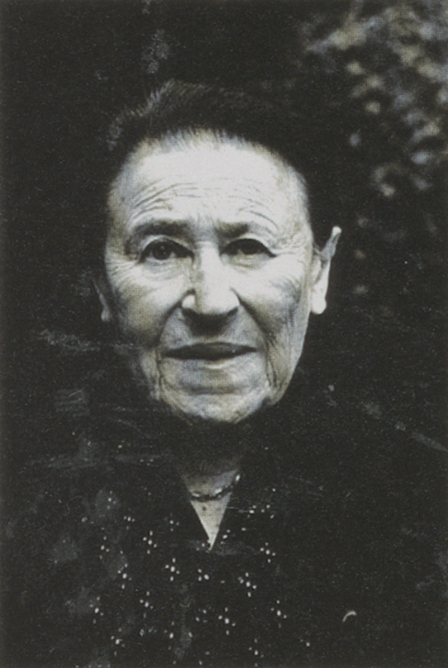
Figure 3: Salcia Landmann in her later years, KBV, VNL 53 : C : 3
At the same time, she voiced her dissatisfaction with German and Swiss migration policy in several right-leaning periodicals. Landmann drew on her racial theories and downplayed, even justified, the sometimes deadly violence against migrants in consequence of German reunification. Already in Sander’s Staatsbriefe, she likewise presented racism – in its literal sense of a racially informed perspective on society – as a key analytical tool. She declared migration from Africa or the Middle East incompatible with European societies. As a self-proclaimed race expert, she attributed intelligence to Jews as a racial trait, in contrast to Black people, whose supposed predisposition to jazz she claimed was equally observable.70
There was a dynamic overlap between Salcia Landmann’s racist reflections and the New Right’s persistent desire to push the memory of the Holocaust to the margins. She repeatedly described German asylum policy as ‘degenerate’, once again drawing on the vocabulary of National Socialism. She linked her critique of a multicultural society with polemics against ‘Germany’s collective willingness to atone for Auschwitz’ (‘kollektive Bußbereitschaft wegen Auschwitz’.) In her view, the fully justified protest against an influx of ‘armies of millions’ (‘Millionenheere’) had nothing to do with ‘Nazi racism’. For Landmann, the real problem lay elsewhere: She maintained that the ‘perverted asylum policy’ she condemned mistakenly cast itself as a lesson drawn from National Socialist history. Jews once faced existential threat and were refused refuge, today’s asylum seekers, she claimed, were for the most part mere impostors and frauds. Despite this stereotypical resentment, Landmann draws attention to overly hasty universalizing interpretations of the Shoah that risk eroding its specifically Jewish experience. An open asylum policy, she argued, resulted from a complex of guilt harbouring ‘irrational mass-psychotic elements’.71 This resonated with Armin Mohler’s attacks on Vergangenheitsbewältigung. Furthermore, with this blend of anti-foreign rhetoric and her critique of Germany’s purported penitential attitude toward Nazi crimes, Landmann readily won the eager approval of the Right.72 For instance, right-leaning Deutschland-Magazin praised Landmann’s remarks as ‘clear words from an authoritative voice’, claiming that, as a Jew who had personally endured racism, she was uniquely qualified to speak to its true nature.73 In this way, Landmann also served to shield the Right from the charge of racism, particularly given that she wrote for both far-right outlets and established conservative media. The article quoted above had appeared in the conservative Welt am Sonntag, for which the now eighty-year-old and still widely read Jewish author regularly wrote columns – even as she was simultaneously contributing to far-right media.74
Right-wing actors have drawn on Jewish voices to make their ostentatious distancing from antisemitism appear credible. The mere fact of Jewish descent is meant to serve as sufficient proof and to block any further discussion of actual content or any genuine engagement with antisemitism from the outset. This is often a reliable indicator for identifying outright antisemites. However, critically intended scholars referring to such attempts as instrumentalisation fall short of capturing the involvement of Jews in far-right contexts. Certainly, right-wing proponents were not uniformly antisemitic, nor did they all instrumentalise their interactions with Jews to the same extent. Beyond that, the latter’s deliberate choice to embrace such political positions is obscured, and their agency in this regard even denied.75 An adequate approach should aim to shed light on the diversity of Jewish political life, while scandalizing narratives offer little in this respect. The analysis cannot set aside the question of whether the Jewish individuals concerned, in cases where they were used as an alibi, were aware of their role – and yet were still willing to stand in for it. Serious analyses need to take into account the reasons why certain Jews opted for right-wing choices. While Jewish political activity has been well examined in relation to liberal, socialist, and left-wing movements, the historical and contemporary involvement of Jews in conservative, nationalist, authoritarian, and far-right currents has received far less scholarly attention. Ironically, far-right attempts at instrumentalisation also derive their power from prevailing narratives that cast Jews primarily within progressive traditions. But Salcia Landmann stands within a strand of Jewish history that tends to be passed over.
In historical perspective, Jews involved in conservative and more radical right-leaning circles always constituted a minority, yet they were far from isolated exceptions and formed a phenomenon observable across Europe. It is worth recalling studies that have documented the enthusiasm of certain Jewish factions for nationalist movements, and in some cases even for the National Socialists. Among these formations – besides the already mentioned Vortrupp – the most prominent was the Verband nationaldeutscher Juden, which advocated radical assimilation into German nationalism. It framed Judaism as a ‘tribe’ rooted in German soil, therefore, any national or otherwise separate status of Jews was in their view delegitimised.76
There are also historical precedents for Landmann’s antisemitic outbursts. Historian Bernard Wasserstein interprets Jewish antisemitism, apart from individual cases such as Otto Weininger or Arthur Trebitsch, not as ‘self-hatred’ or self-denial, but in most instances directed towards other Jews. History offers numerous examples of Jews denouncing fellow Jews – not as instances of ‘self-hatred’ or psychological capitulation to antisemitism, but as public attacks prompted by disagreements over the meaning of Judaism and over the ways in which others presented themselves as Jews. A considerable number of long-established German Jews accepted antisemitism aimed at ‘Ostjuden’, hoping thereby to channel general Jew-hatred toward that group and deflect it from themselves. Even the stereotyped Herr Wendriner satires by Kurt Tucholsky did not express shame or stain arising from his Jewish birth. His critique of German-Jewish bourgeois compromisers on the one hand did not hold him back from castigating his Gentile surroundings with equal, if not greater, severity. Likewise, Karl Kraus launched infamous attacks on representatives of the ‘Jewish press’, attacks that were marked by the antisemitic invective typical of his time. Yet even as he engaged in such polemics, he simultaneously exposed antisemites and ridiculed their mockery of Jewish names.77
Despite this prominent company in which Landmann was situated, her antisemitic outbursts against Friedrich Torberg should not be trivialised. It is unmistakable that Torberg’s earlier attack wounded her deeply. Second-hand accounts point to Landmann’s ‘self-esteem issues’.78 It is difficult to illuminate the motives behind her statements without drifting into psychological speculation. In addition, a particular challenge lies in reconciling these statements with her meticulous engagement with the history of antisemitism. Although her work only partially met scholarly standards, she was an educated autodidact who invested considerable effort and sought to promote public understanding. Even in her book on race, one can clearly discern an attempt to recast the racist vilification of Jews by the Nazis and other pseudo-scientific racial theorists in a more positive light.
What makes Salcia Landmann’s case exceptional, however, is her flirtation with the political Right after the Holocaust. By her own account, she lost more than 200 family members in the Holocaust.79 Even so, she worked with right-wing circles because she shared many core convictions with them. Salcia Landmann did not seek to dismantle liberal democracy, but in her political writing she nonetheless advanced a broad range of positions that clearly placed her right of the established conservative spectrum. Her overlaps with the New Right were likewise rooted in her Jewish identity. Antisemitism was Landmann’s self-declared red line, although she was also inclined to overlook or downplay right-wing antisemitism. Nonetheless, her contributions to right-wing outlets advocated for a Right cleansed of antisemitism. A ‘passport Swiss’ (‘Papierschweizerin’)80 by citizenship, Landmann understood her primary identity to be her Jewishness and saw herself as a Zionist ‘on foreign assignment’.81 While her efforts to promote a pro-Israel stance within right-wing circles remained largely unsuccessful in her lifetime – as did her appeal for an unequivocal rejection of antisemitism – the aforementioned racist outbursts were well-received. Thus, right-wing actors still point today to her acquaintance with Armin Mohler or to her book on race, casting it as a rehabilitation of the term simply by virtue of its Jewish author.
Still, her work in its full breadth should not be condemned, nor should its author be declared a persona non grata. Even those repelled by her right-wing journalism may acknowledge that she introduced Jewish themes into a predominantly hostile milieu and advocated for their recognition. Even those who share Torberg’s criticism – that the jokes Landmann offered were not particularly pointed and at times revealed a streak of self-denigration – may still take pleasure in her many other publications. Landmann introduced a wide readership to diverse aspects of Jewish culture. In the end, she remained without a true sense of belonging not only within the Right. She spent most of her life in St. Gallen, yet lived apart from the local Jewish community and was not buried in the Jewish cemetery.82
Landmann, Der jüdische Witz.⬑
Landmann, Marxismus und Sauerkirschen, 7.⬑
Ein Abend mit Salcia Landmann, Leobuchhandlung St. Gallen, 14.02.1990 [Typoskript], in: Kantonsbibliothek Vadiana, NL 53 (Landmann), B:1:1:18.⬑
Landmann, Phänomenologie und Ontologie.⬑
Landmann, Mein Galizien.⬑
Landmann, Erzählte Bilderbogen aus Ostgalizien.⬑
Chylewska-Tölle and Tölle, ‘Spuren eines Vielvölkerstädtchens. Das polnisch-ukrainisch-jüdische Zolkiew der Salcia Landmann (“Erzählte Bilderbogen aus Ostgalizien“)’, 43.⬑
Nein, nein, du bist keine Jüdin!, 20.⬑
Cf. Landmann, Koschere Kostproben; Landmann, Jüdische Anekdoten; Landmann, Wenn es bitter ist, ist es koscher; Landmann, Am Sabbat ging Moishe zum Rebbe.⬑
Landmann, Jiddisch; a positive review appeared by Althaus, ‘Salcia Landmann, Jiddisch. Das Abenteuer einer Sprache. Olten und Freiburg im Breisgau: Walter (1962). 469 S.’. The book included an introduction by Franz J. Beranek, a former member of the NSDAP and the SS, who during the Nazi period had worked as a linguist in various cultural and educational institutions tied to National Socialist ethnic policies. After 1945, Beranek sought recognition as a Yiddish scholar.⬑
Cf. ‘LANDMANN, SALCIA (Salcia Passweg) Dr. phil., Übersetzerin’.⬑
For instance, she interceded with the philologist Bruno Snell on behalf of the scholars Georg Nador and Siegmund A. Wolf, cf. Salcia Landmann to Bruno Snell, 24.07.1962 und 27.04.1963, in: BSB München, Ana 490 B.IV.⬑
Roditi, ‘The “Return” of Europe’s Jews’.⬑
‘Bin ich eine Forelle?’.⬑
Cf. Kaplan, At Wit's End, 196.⬑
Theodor W. Adorno to Editorial Board of Frankfurter Hefte, 11.11.1960, in: Gödde and Lonitz, Th. W. Adorno – Max Horkheimer, 637.⬑
Kaplan, At Wit’s End, 187.⬑
Cf. Meyerowitz, Der echte jüdische Witz, 14.⬑
Cf. Singer, ‘Der Judische Witz, by Salcia Landmann’; Adorno, 11.11.1960.⬑
Torberg, ‘“Wai geschrien!” oder Salcia Landmann ermordet den jüdischen Witz’, 206.⬑
Torberg, 208.⬑
Cf. Hessing, ‘Wie klingt ein jiddischer Witz auf Deutsch?’, 42.⬑
Cf. Singer, ‘Der Judische Witz, by Salcia Landmann’; Torberg, ‘“Wai geschrien!” oder Salcia Landmann ermordet den jüdischen Witz’, 203f. For the broader context of Torberg’s engagement in the debate on Jewish humor, cf. Körner, Israelische Satiren für ein westdeutsches Publikum, 154–176.⬑
Schmitz and Präger, Jüdische Schwänke.⬑
Ein Abend mit Salcia Landmann, Leobuchhandlung St. Gallen, 14.02.1990 [typescript, 21p.], KBV, VNL 53 : B : 1 :1.⬑
Salcia Landmann, Notizen zu Leben, Werk und Wirkung von Dr. phil. Salcia Landmann, c. 1994 [typescript, 10p.],
KBV, VNL 53 : C : 4 : 2.⬑
Landmann, Die Juden als Rasse.⬑
Landmann, Die Juden als Rasse, 347.⬑
Salcia Landmann, Rassenlehre als jüdisches Gegenwartsproblem, 1946 [typescript, 18p.], KBV, VNL 53 : B : 1 :9.⬑
Cf. Morris-Reich, ‘Race, ideas, and ideals: A comparison of Franz Boas and Hans F.K. Günther’.⬑
Cf. Efron, Defenders of the Race; Lipphardt, Biologie der Juden.⬑
Pohl, ‘Salcia Landmanns Buch – Von einer deutschen Frau gelesen’. Similar, cf. Tikki, ‘Die Juden als Rasse. Das Volk unter den Völkern: Ein Buch in der Diskussion’.⬑
Cf. Botsch, ‘“Nationale Opposition” in der demokratischen Gesellschaft’.⬑
Cf. Neuffer and Paul, ‘Rechte Hefte: Zeitschriften der alten und neuen Rechten nach 1945’.⬑
Ehrhardt, ‘Judentum am Scheideweg’, 4.⬑
Cf. Weißmann, ‘Die Juden als Rasse’.⬑
Landmann, ‘Für einen fruchtbaren Dialog zwischen Christen und Juden’.⬑
Landmann, Marxismus und Sauerkirschen.⬑
For a broad overview, cf. Langebach and Raabe, ‘Die “Neue Rechte” in der Bundesrepublik Deutschland’.⬑
Cf. Tändler, Armin Mohler und die intellektuelle Rechte in der Bonner Republik, in particular 17–19.⬑
Mohler, Vergangenheitsbewältigung, 101.⬑
Cf. Mohler, ‘Einbahnstraße in die Vergangenheit’; Mohler, Was die Deutschen fürchten.⬑
For an overview of this ‘old’ generation of West Germany’s extreme right, cf. Botsch, Die extreme Rechte in der Bundesrepublik Deutschland 1949 bis heute, 17-59.⬑
As a seminal account of the international networks of holocaust denialists, cf. Lipstadt, Denying the Holocaust. On the initial wave of denialism in France and West Germany, cf. Müller-Zetzsche, ‘“Das Problem der 6 Millionen”: Holocaustleugnung als Kampagnenthema der extremen Rechten nach 1945’; On Israel-related forms of far-right antisemitism, cf. Botsch and Kopke. ‘Kontinuität des Antisemitismus: Israel im Blick der extremen Rechten’ and Weber, ‘Liegt Israel in Europa?’.⬑
This held especially for Jewish individuals who claimed that the Holocaust had been misused for political or economic purposes, or went so far to deny it altogether. As a key example, cf. Burg, Zionnazi Zensur in der BRD.⬑
Cf. Weber, ‘Armin Mohler, die Neue Rechte und der Antisemitismus 1950 bis 1995’, 269–286.⬑
Cf. Salcia Landmann to Edith Mohler, 31.08.1994, KBV, VNL 53 : A : 1 : 45 : 1 and Landmann, ‘An Armin Mohler’.⬑
Cf. Dittrich, ‘Zeitschriftenporträt: Criticón’; for a nuanced assessment of Criticón throughout its existence, cf. Hagedorny, Feinde machen.⬑
Cf. Landmann, ‘Herbert Marcuse und der jüdische Sexual-Messianismus des 17. Jahrhunderts’.⬑
Cf. Landmann, ‘Eher konservativ denn revolutionär’.⬑
Landmann, ‘Der geborgte Heiligenschein’, 173.⬑
For instance, a manuscript on Israel from the Right was ignored. On her attempted contributions, cf. Salcia Landmann to Regina von Schrenck-Notzing, 9.5.1984, Library of Conservatism Berlin (BdK), Criticón Correspondence, Folder L.⬑
Cf. Wamper, Das Kreuz mit der Nation.⬑
Cf. Landmann, ‘Für einen fruchtbaren Dialog zwischen Christen und Juden’.⬑
Landmann, ‘Meine Antwort an Armin Mohler’.⬑
Energised by German reunification, Staatsbriefe sought to create an intellectual forum of the Right centered on the so-called Reichsidee, drawing on Carl Schmitt and other authoritarian theorists to imagine a ‘Fourth Reich’ and to promote a revisionist nationalism purified of the crimes of the past, cf. Erb, ‘Staatsbriefe (1990–2001)’.⬑
Sander, Die Auflösung aller Dinge, 7.⬑
Blüher and Schoeps, Streit um Israel.⬑
Cf. Rheins, ‘Deutscher Vortrupp, Gefolgschaft deutscher Juden 1933–1935’ and contextualized into a history of Jewish conservatism in Germany, Nielsen, Between Heimat and Hatred, 211–252. When Schoeps was later attacked for this engagement after his return to Germany, he transparently re-published all related materials, cf. Schoeps, „Bereit für Deutschland“: Der Patriotismus deutscher Juden und der Nationalsozialismus.⬑
Cf. Stienen, Hans-Joachim Schoeps und der Nationalsozialismus.⬑
Cf. Sander, Die Auflösung aller Dinge, 178–212.⬑
Cf. Landmann, ‘“Die Auflösung aller Dinge” aus jüdischer Sicht’.⬑
Cf. Landmann, ‘Fundamentalismus und Zionismus’.⬑
Cf. Sander, ‘Dissens in Detailfragen’, 37.⬑
Landmann, ‘Der jüdische Witz und Torberg’, 10–11.⬑
Landmann, ‘Der jüdische Witz und Torberg’, 20.⬑
Landmann, ‘Der jüdische Witz und Torberg’, 11.⬑
Landmann, ‘Der jüdische Witz und Torberg’, 15.⬑
Salcia Landmann to Dietrich Gerhardt, 4.11.91, KBV, VNL 53 : A : 2 : 11 : 1. This was likely connected to a diagnosis of advanced peripheral arterial disease, commonly known as ‘smoker’s leg,’ and the consequences of its treatment, cf. Salcia Landmann to Martin-Jochen Schulz, 11.1.1988, KBV, VNL 53 : A : 2 : 35 : 1.⬑
Cf. Landmann, ‘Fug und Unfug des Rassismus’, 21.⬑
Landmann, ‘Asylanten – und Baron Rothschilds Rezept …’.⬑
Cf. Frey, Deutschlands Ausplünderung, 43.⬑
“Asylpolitik – ein übler Witz’.⬑
Cf. Landmann, ‘Asylanten – und Baron Rothschilds Rezept …’, similar Landmann, ‘Vergleich von Asylanten und Juden unter NS-Regime ist beleidigend’.⬑
Approaches that reduce Jews in the AfD [Alternative for Germany] to a mere ‘function’ or ‘instrument’ can be found in cf. Hösel, ‘Warum Antisemiten Alibi-Juden brauchen’; Botsch, ‘Die “Juden in der AfD” und der Antisemitismus’.⬑
Cf. Rheins, ‘The Verband nationaldeutscher Juden 1921–1933’ and in more detail Hambrock, Die Etablierung der Außenseiter.⬑
Cf. Wasserstein, On the Eve, 211–218.⬑
A biography of Salcia’s son, the attorney Valentin Landmann, cites a psychiatric report by Mario Gmür concerning Valentin and his relationship with his mother, cf. Schlapp, Valentin Landmann und die Panzerknacker.⬑
Cf. Nein, nein, du bist keine Jüdin!, 27.⬑
Landmann, ‘“Papierschweizerin” im vollen Sinne’.⬑
Nein, nein, du bist keine Jüdin!, 28.⬑
Information provided in private email correspondence with Roland Richter, former president of the Jewish Community of St. Gallen, 21.8.2021.⬑
Althaus, Hans Peter. ‘Salcia Landmann, Jiddisch. Das Abenteuer einer Sprache. Olten und Freiburg im Breisgau: Walter (1962). 469 S.’ Zeitschrift für Mundartforschung 31 (1964): 378–79.
‘Asylpolitik – Ein übler Witz’. Deutschland-Magazin, no. 12 (1991): 5.
Der Spiegel. ‘Bin ich eine Forelle?’, December 13, 1960. 51.
Blüher, Hans, and Hans-Joachim Schoeps. Streit um Israel: Ein jüdisch-christliches Gespräch. Hamburg: Hanseatische Verlagsanstalt, 1933.
Botsch, Gideon. Die extreme Rechte in der Bundesrepublik Deutschland 1949 bis heute. Bonn, 2012.
Botsch, Gideon. ‘“Nationale Opposition” in der demokratischen Gesellschaft: Zur Geschichte der extremen Rechten in der Bundesrepublik Deutschland’. In Virchow; Langebach; Häusler, Handbuch Rechtsextremismus, 43–82.
Botsch, Gideon. ‘Die “Juden in der AfD” und der Antisemitismus’. Mitteilungen der Emil Julius Gumbel Forschungsstelle, no. 7 (2020): 1–15.
Botsch, Gideon and Christoph Kopke. ‘Kontinuität des Antisemitismus: Israel im Blick der extremen Rechten’. In Deutschland, die Juden und der Staat Israel: Eine politische Bestandsaufnahme, edited by Olaf Glöckner and Julius H. Schoeps, 285-313. Hildesheim: Georg Olms Verlag, 2016.
Burg, J. G. Zionnazi Zensur in der BRD. München: Ederer Verlag, 1980.
Chylewska-Tölle, Aleksandra, and Alexander Tölle. ‘Spuren eines Vielvölkerstädtchens. Das polnisch-ukrainisch-jüdische Zolkiew der Salcia Landmann (“Erzählte Bilderbogen aus Ostgalizien”)’. Convivium. Germanistisches Jahrbuch Polen 5 (2011): 33–55.
Dittrich, Sebastian. ‘Zeitschriftenporträt: Criticón’. Jahrbuch Extremismus und Demokratie 19 (2007): 263–87.
Efron, John. Defenders of the Race: Jewish Doctors and Race Science in Fin-De Siécle Europe. New Haven: Yale University Press, 1994.
Ehrhardt, Arthur. ‘Judentum am Scheideweg’. Nation Europa 18, no. 7 (1968): 3–8.
Erb, Rainer. ‘Staatsbriefe (1990-2001)’. In Handbuch des Antisemitismus: Judenfeindschaft in Geschichte und Gegenwart, edited by Wolfgang Benz, 664–67. Berlin: de Gruyter, 2013.
Frey, Gerhard. Deutschlands Ausplünderung: Das deutsche Volk als Melk-Kuh der Welt. München: FZ-Verlag, 1993.
Gödde, Christoph, and Henri Lonitz, eds. Th. W. Adorno – Max Horkheimer: Briefwechsel. Band IV, 1950–1969. Frankfurt am Main: Suhrkamp, 2006.
Hagedorny, Matheus. Feinde machen: Islambilder der deutschen Neuen Rechten 1970–2005. Frankfurt am Main: Campus, 2026.
Hambrock, Matthias. Die Etablierung der Außenseiter: Der Verband nationaldeutscher Juden 1921-1935. Köln: Böhlau Verlag, 2003.
Hessing, Jakob. ‘Wie klingt ein jiddischer Witz auf Deutsch? Zwischen Siegmund Freud und Salcia Landmann’. In Wegweiser und Grenzgänger: Studien zur deutsch-jüdischen Kultur- Und Literaturgeschichte, edited by Stefan Vogt, Hans Otto Horch, Vivian Liska and Malgorzata A. Maksymiak, 31–44. Wien: Böhlau, 2018.
Hösel, Jessica. ‘Warum Antisemiten Alibi-Juden brauchen: Eine kurze Analyse der Juden in der AfD (JAfD)’. https://www.diss-duisburg.de/2024/06/warum-antisemiten-alibi-juden-brauchen/.
Kaplan, Louis. At Wit’s End: The Deadly Discourse on the Jewish Joke. New York: Fordham University Press, 2020.
Körner, Birgit M. Israelische Satiren für ein westdeutsches Publikum: Ephraim Kishon, Friedrich Torberg und die Konstruktionen ‘Jüdischen Humors’ nach der Schoah. Berlin: Neofelis, 2024.
Landmann, Salcia. Phänomenologie und Ontologie: Husserl, Scheler, Heidegger. Leipzig: Heitz, 1939.
Landmann, Salcia. Der jüdische Witz: Soziologie und Sammlung. Olten: Walter-Verlag, 1960.
Landmann, Salcia. Jiddisch: Das Abenteuer einer Sprache. Olten, Freiburg im Breisgau: Walter, 1962.
Landmann, Salcia. Koschere Kostproben: Rezepte aus Alt-Österreich für Feinschmecker. Rüschlikon: Müller, 1964.
Landmann, Salcia. Jüdische Anekdoten. München: Deutscher Taschenbuch Verlag, 1965.
Landmann, Salcia. Die Juden als Rasse: Das Volk unter den Völkern. Olten: Walter-Verlag, 1967.
Landmann, Salcia. ‘Der geborgte Heiligenschein: Bemerkungen zum Intellektuellenkult’. Criticón 3, no. 12 (1972): 172–74.
Landmann, Salcia. ‘Eher konservativ denn revolutionär: Marginalien zur jüdischen Geschichte’. Criticón 3, no. 10 (1972): 62–67.
Landmann, Salcia. ‘Herbert Marcuse und der jüdische Sexual-Messianismus des 17. Jahrhunderts’. Criticón 4, no. 16 (1973): 78–80.
Landmann, Salcia. Erzählte Bilderbogen aus Ostgalizien. München: Ehrenwirth, 1975.
Landmann, Salcia. Marxismus und Sauerkirschen: Streitbare Zeitbetrachtung. Wiesbaden: Limes, 1979.
Landmann, Salcia. ‘Der jüdische Witz und Torberg’. Staatsbriefe 1, no. 4 (1990): 9–17.
Landmann, Salcia. ‘Der jüdische Witz und Torberg: 1. Fortsetzung’. Staatsbriefe 1, no. 5 (1990): 19–21.
Landmann, Salcia. ‘Der jüdische Witz und Torberg: 2. Fortsetzung’. Staatsbriefe 1, no. 6 (1990): 10–13.
Landmann, Salcia. ‘Der jüdische Witz und Torberg: 4. Fortsetzung’. Staatsbriefe 1, no. 8 (1990): 14–17.
Landmann, Salcia. ‘„Die Auflösung aller Dinge“ aus jüdischer Sicht’. Staatsbriefe 1, no. 3 (1990): 32–36.
Landmann, Salcia. ‘Fug und Unfug des Rassismus’. Staatsbriefe 1, no. 9 (1990): 15–22.
Landmann, Salcia. ‘Fundamentalismus und Zionismus’. Staatsbriefe 1, no. 2 (1990): 37.
Landmann, Salcia. ‘“Papierschweizerin” im vollen Sinne’. Israelitisches Wochenblatt, May 3, 1991.
Landmann, Salcia. ‘Asylanten – und Baron Rothschilds Rezept …’, Welt am Sonntag, November 10, 1991.
Landmann, Salcia. Die Juden als Rasse: Das Volk unter den Völkern. 3rd ed. Frankfurt am Main: Ullstein, 1992.
Landmann, Salcia. ‘Vergleich von Asylanten und Juden unter NS-Regime ist beleidigend’. Welt am Sonntag, September 20, 1992.
Landmann, Salcia. ‘Meine Antwort an Armin Mohler’. Junge Freiheit 9, no. 32 (1994): 17.
Landmann, Salcia. ‘An Armin Mohler’. In Der andere Mohler: Lesebuch für einen Selbstdenker. Armin Mohler zum 75. Geburtstag, edited by Ulrich Fröschle, Markus J. Klein and Michael Paulwitz, 67–69. Limburg a.d. Lahn: San Casciano Verlag, 1995.
Landmann, Salcia. Mein Galizien: Das Land hinter den Karpaten. München: Herbig, 1995.
Landmann, Salcia. ‘Für einen fruchtbaren Dialog zwischen Christen und Juden’. Junge Freiheit [Sonderbeilage 10 Jahre JF], June 14, 1996. 25.
Landmann, Salcia. Wenn es bitter ist, ist es koscher. Zürich: Benziger, 2001.
Landmann, Salcia. Am Sabbat ging Moishe zum Rebbe. Zürich: Benziger, 2002.
‘LANDMANN, SALCIA (Salcia Passweg) Dr. Phil., Übersetzerin’. In Lexikon deutsch-jüdischer Autoren: Band 15 Kura – Lewa, edited by Renate Heuer, 92–99. München: Saur, 2007.
Langebach, Martin, and Jan Raabe. ‘Die “Neue Rechte” in der Bundesrepublik Deutschland’. In Virchow; Langebach; Häusler, Handbuch Rechtsextremismus, 561–92.
Lipphardt, Veronika. Biologie der Juden: Jüdische Wissenschaftler über ‘Rasse’ und Vererbung 1900–1935. Göttingen: Vandenhoeck Ruprecht, 2010.
Lipstadt, Deborah E. Denying the Holocaust: The Growing Assault on Truth and Memory. New York, 1993.
Meyerowitz, Jan. Der echte jüdische Witz. Berlin: Colloquium, 1971.
Mohler, Armin. ‘Einbahnstraße in die Vergangenheit: Über Irrwege in der Geschichtsbetrachtung’. Christ und Welt 17, no. 29 (1964).
Mohler, Armin. Was die Deutschen fürchten: Angst vor der Politik – Angst vor der Geschichte – Angst vor der Macht. Stuttgart: Ullstein, 1965.
Mohler, Armin. Vergangenheitsbewältigung: Von der Läuterung zur Manipulation. Stuttgart: Seewald, 1968.
Morris-Reich, Amos. ‘Race, Ideas, and Ideals: A Comparison of Franz Boas and Hans F.K. Günther’. History of European Ideas 32, no. 3 (2006): 313–32.
Müller-Zetzsche, Marie. ‘“Das Problem der 6 Millionen”: Holocaustleugnung als Kampagnenthema der extremen Rechten nach 1945’. https://zeitgeschichte-online.de/kommentar/das-problem-der-6-millionen.
Nein, nein, du bist keine Jüdin! Henning v. Vogelsang im Gespräch mit Salcia Landmann. Ulm: Hess, 1998.
Neuffer, Moritz, and Morten Paul. ‘Rechte Hefte: Zeitschriften der alten und neuen Rechten nach 1945’. https://www.eurozine.com/rechte-hefte/.
Nielsen, Philipp. Between Heimat and Hatred: Jews and the Right in Germany, 1871-1935. New York: Oxford University Press, 2019.
Pohl, Brigitte. ‘Salcia Landmanns Buch – von einer deutschen Frau gelesen’. Nation Europa 18, no. 7 (1968): 16–18.
Rheins, Carl J. ‘The Verband nationaldeutscher Juden 1921–1933’. Leo Baeck Institute Yearbook 25 (1980): 243–68.
Rheins, Carl J. ‘Deutscher Vortrupp, Gefolgschaft deutscher Juden 1933-1935’. Leo Baeck Institute Yearbook 26 (1981): 207–29.
Roditi, Édouard. ‘The “Return” of Europe’s Jews’. Commentary 19, no. 6 (1963).
Sander, Hans-Dietrich. Die Auflösung aller Dinge: Zur geschichtlichen Lage des Judentums in den Metamorphosen der Moderne. München: Castel del Monte, 1988.
Sander, Hans-Dietrich. ‘Dissens in Detailfragen’. Staatsbriefe, no. 6 (1990): 35–37.
Schoeps, Hans-Joachim, ed. „Bereit für Deutschland“: Der Patriotismus deutscher Juden und der Nationalsozialismus. Frühe Schriften 1930-1938. Eine historische Dokumentation. Berlin: Haude & Spenersche Verlagsbuchhandlung, 1970.
Schlapp, Manfred. Valentin Landmann und die Panzerknacker: Von einem, der auszog, das Nicht-Fürchten zu lernen. Zürich: Offizin, 2017.
Schmitz, Siegfried, and Max Präger, eds. Jüdische Schwänke. Wien, Leipzig: Löwit, 1928.
Singer, Isaac Bashevis. ‘Der Judische Witz, by Salcia Landmann’. Commentary 17, no. 5 (1961): 458–62.
Stienen, Daniel Benedikt. Hans-Joachim Schoeps und der Nationalsozialismus: Studien zu einem komplizierten Verhältnis. Baden-Baden: Georg Olms Verlag, 2026.
Tändler, Maik. Armin Mohler und die intellektuelle Rechte in der Bonner Republik. Göttingen: Wallstein, 2025.
Tikki, Rikki. ‘Die Juden als Rasse. Das Volk unter den Völkern: Ein Buch in der Diskussion’. Nation Europa 18, no. 7 (1968): 9–10.
Torberg, Friedrich. ‘“Wai geschrien!” oder Salcia Landmann ermordet den jüdischen Witz: Anmerkungen zu einem beunruhigenden Bestseller’. Der Monat 14, no. 157 (1961): 183–208.
Virchow, Fabian, Martin Langebach, and Alexander Häusler, eds. Handbuch Rechtsextremismus. Wiesbaden: Springer VS, 2016.
Wamper, Regina. Das Kreuz mit der Nation: Christlicher Antisemitismus in der “Jungen Freiheit”. Münster: Unrast, 2008.
Wasserstein, Bernard. On the Eve: The Jews of Europe before the Second World War. London: Profile Books, 2012.
Weber, Fabian. ‘Liegt Israel in Europa? Projektionen extremer Rechter in der Bundesrepublik’. Münchner Beiträge zur jüdischen Geschichte und Kultur 18, no. 2 (2024): 29–41.
Weber, Fabian. ‘Armin Mohler, die Neue Rechte und der Antisemitismus 1950 bis 1995’. Vierteljahrshefte für Zeitgeschichte 73, no. 2 (2025): 251–89.
Weißmann, Karlheinz. ‘Die Juden als Rasse’. https://wiki.staatspolitik.de/index.php?title=Die_Juden_als_Rasse.